
The Department of Social Security and Women & Child Development, Government of Punjab, implements the transformative Bebe Nanki Ladli Beti Kalyan Yojana 2026 (ਬੇਬੇ ਨਾਨਕੀ ਲਾਡਲੀ ਬੇਟੀ ਕਲਿਆਣ ਯੋਜਨਾ). Formulated to honor the sacred memory of Bebe Nanki Ji—the elder sister of Guru Nanak Dev Ji and an epitome of unconditional familial devotion—this scheme is designed to eradicate female foeticide, uplift the child sex ratio, and ensure the holistic educational and economic empowerment of girl children born into low-income households.
Under this welfare initiative, the state government establishes structured financial endowments and institutional insurance bonds through the Life Insurance Corporation of India (LIC) for newly born girl children. As the girl child crosses crucial educational milestones from primary school through higher secondary graduation, recurring financial scholarships are disbursed, culminating in a substantial maturity fund upon her attaining adulthood at 18 years of age.
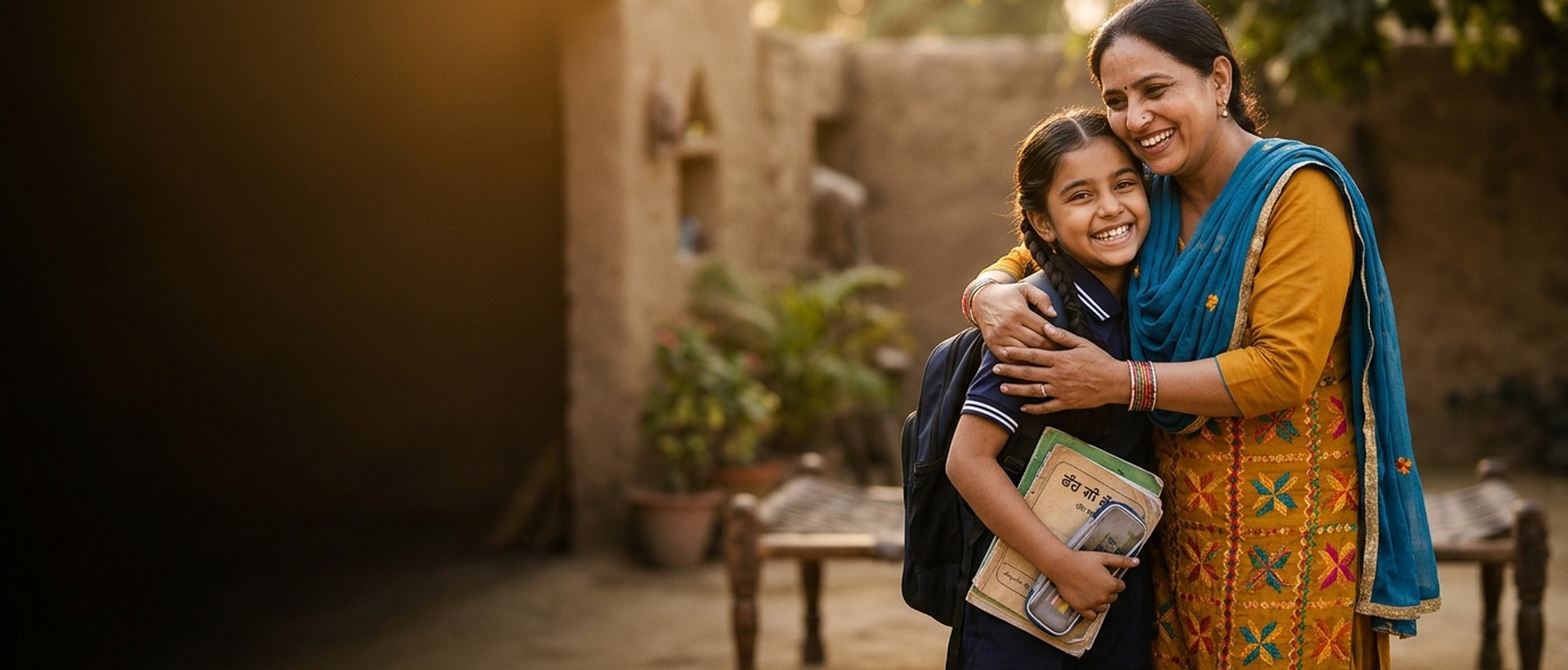
Bebe Nanki Ladli Beti Kalyan Yojana: Key Highlights
| Particulars | Scheme Details |
|---|---|
| Scheme Name | Bebe Nanki Ladli Beti Kalyan Yojana 2026 (ਬੇਬੇ ਨਾਨਕੀ ਲਾਡਲੀ ਬੇਟੀ ਸਕੀਮ) |
| Administering Department | Department of Social Security, Women & Child Development, Punjab |
| Implementation Partner | Life Insurance Corporation of India (LIC) & State Child Welfare Board |
| Target Beneficiaries | Newborn girl children and schooling girls from underprivileged families |
| Maximum Beneficiaries | Up to 2 girl children per eligible family |
| Annual Income Ceiling | Annual family income not exceeding ₹30,000 (or certified BPL/EWS) |
| Benefit Structure | Periodic education grants + Lump sum maturity payout at 18 years of age |
| Application Authority | Child Development Project Officer (CDPO) / Anganwadi Centre / Sewa Kendra |
Milestone-Based Financial Assistance Structure
The scheme provides staggered financial disbursements aligned with the girl child's educational retention and health progress, ensuring families never view a daughter's education as a financial liability:
- Stage 1 (At Birth / Enrollment): An initial financial corpus is invested in an institutional insurance bond administered via LIC, generating statutory interest and bonus growth.
- Stage 2 (Primary Admission - Class 1): Educational support stipend to finance books, stationery, and uniforms upon successful primary school enrollment.
- Stage 3 (Upper Primary - Class 6): Annual academic scholarship to prevent dropouts during transitional schooling years.
- Stage 4 (Secondary School - Class 9): Higher education retention allowance to encourage completion of high school education.
- Stage 5 (Senior Secondary - Class 11 & 12): Continued financial grant to support senior secondary examination preparations.
- Stage 6 (Final Maturity at Age 18): A lump sum maturity disbursement (exceeding ₹61,000 to ₹1,00,000+ inclusive of LIC interest accumulations) released directly into the young woman's verified bank account upon turning 18, provided she completes Class 12 unmarried.
Core Objectives & Social Impact
The Bebe Nanki Ladli Beti Kalyan Yojana plays an indispensable role in transforming social attitudes toward the girl child in rural and peri-urban Punjab:
- Eliminating Female Foeticide: Incentivizes institutional birth registration and celebrates the arrival of daughters in poor households.
- Ensuring Universal Schooling: By tying monetary tranches to school enrollment and progression, it drastically lowers dropout rates among adolescent girls.
- Preventing Child Marriage: The substantial final maturity payout is strictly conditional upon the girl child remaining unmarried until completing 18 years of age.
- Economic Self-Sufficiency: Provides young women with direct seed capital at age 18 to fund college degrees, vocational diplomas, or entrepreneurial pursuits.
Eligibility Criteria
To be declared eligible for the scheme, the applicant family must satisfy the following statutory conditions:
- Domicile of Punjab: Parents/guardians must be bonafide residents of Punjab holding valid state identification.
- Income Benchmark: The total annual income of the household from all sources must not exceed ₹30,000 per annum, or the family must be enrolled as BPL cardholders.
- Family Size Limit: Assistance is limited to a maximum of two girl children per household.
- Institutional Birth: Preference is given to deliveries carried out in government hospitals, CHCs, or registered nursing homes with timely birth registration.
- Educational Continuity: The beneficiary girl child must be regularly enrolled in a recognized government or private educational institution.
Documents Required for Registration
The following verified documents must accompany the prescribed application dossier:
- Birth Certificate: Official birth registration certificate of the girl child issued by the Registrar of Births & Deaths.
- Parents' Identification: Aadhaar Cards and Voter ID cards of father and mother/guardian.
- Proof of Residence: Punjab Domicile Certificate / Electricity Bill / Ration Card.
- Income Verification: Income Certificate issued by Revenue Authority (Tehsildar / SDM) certifying annual income below ₹30,000, or verified BPL Smart Card.
- School Enrollment Proof: Bonafide certificate issued by the school headmaster/principal (for schooling stages).
- Bank Account Details: Bank passbook photocopy of joint savings account opened in the name of the girl child and mother with active IFSC code.
- Passport Photographs: Recent passport-sized color photos of the girl child and parents.
Step-by-Step Application Procedure
Step 1: Collect Application Dossier
- Visit your local Anganwadi Centre (AWC) or the office of the Child Development Project Officer (CDPO) in your block/tehsil.
- Obtain the official printed form for Bebe Nanki Ladli Beti Kalyan Yojana. Forms are also accessible at district Sewa Kendras.
Step 2: Verification and Submission
- Accurately complete all personal and demographic columns regarding the girl child and parents.
- Attach attested photocopies of birth certificate, income certificate, domicile, and joint bank passbook.
- Have the application verified and signed by the local Anganwadi Worker (AWW) or village Sarpanch/Municipal Councilor.
- Submit the dossier to the CDPO Office or Sewa Kendra and retain the stamped acknowledgment receipt for tracking.
Step 3: Policy Sanction and Account Credit
- The District Social Security Officer (DSSO) inspects the application and transmits verified data to the Life Insurance Corporation of India (LIC).
- LIC issues the official insurance/endowment bond certificate handed over to the family.
- Annual educational grants and final maturity payouts are automatically credited directly into the beneficiary's Aadhaar-linked bank account.
Official Portals & Department Contacts
For official application forms, district CDPO contacts, and grievance redressal, refer to the official portal of Social Security, Women & Child Development:
To leave a comment, click the button below to sign in with Blogger.