
The Government of Punjab, in partnership with the Indian Red Cross Society and the Department of Social Security, Women & Child Development, administers the humanitarian Panghura Scheme (ਪੰਘੂੜਾ ਸਕੀਮ / पालना योजना). Specifically conceptualized as a life-saving sanctuary for unwanted, distressed, or abandoned infants, this initiative provides a safe, anonymous cradle facility to combat the tragic scourge of female infanticide, infant dumping in perilous locations, and child mortality.
Rather than leaving unwanted babies in trash bins, roadside drains, fields, or bus stands where they face fatal exposure, parents or guardians under extreme distress can legally and anonymously place the infant into specially engineered cradles (Panghura) set up outside designated civil hospitals and Red Cross offices statewide.

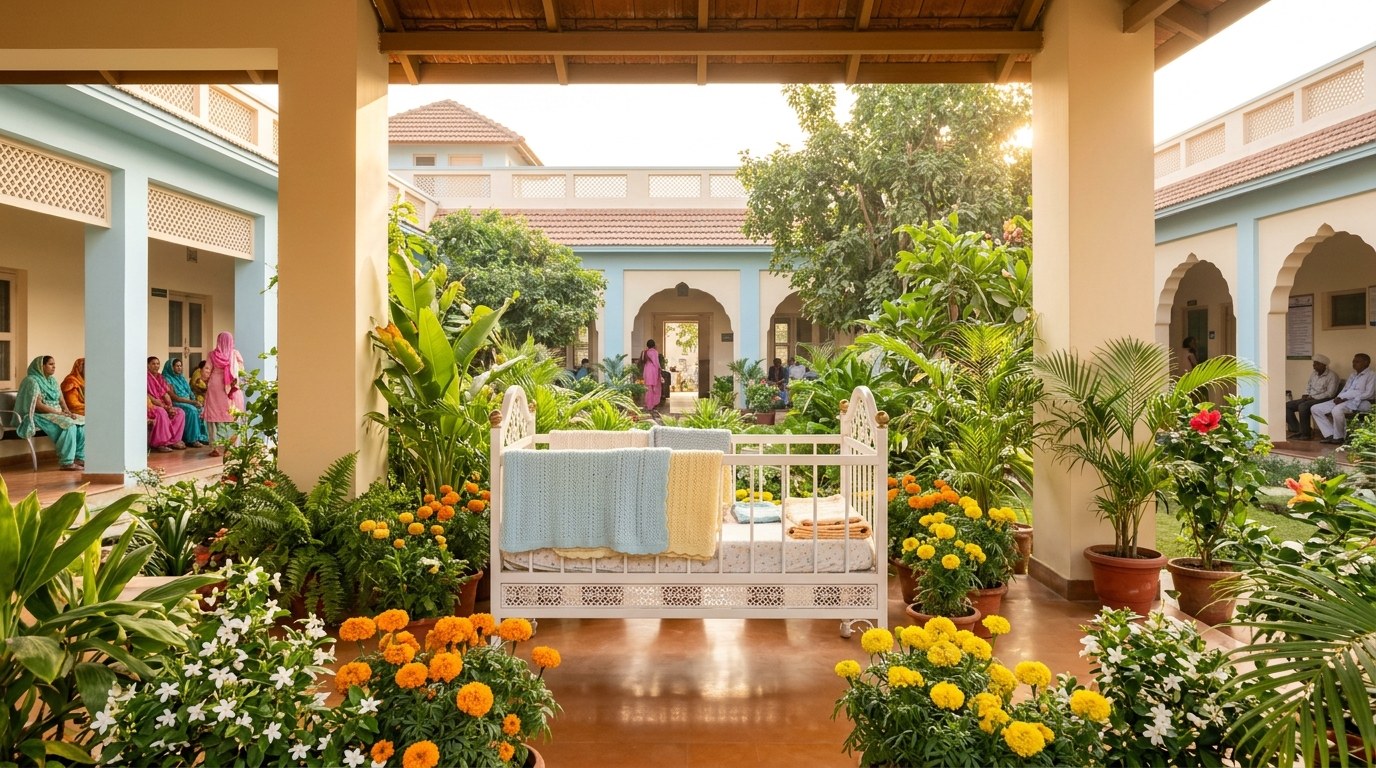
Punjab Panghura Scheme: Key Highlights
| Particulars | Scheme Details |
|---|---|
| Scheme Name | Panghura Scheme (Cradle Baby Reception Scheme / पालना योजना) |
| Administering Agencies | District Red Cross Societies & Department of Social Security, Women & Child Development, Punjab |
| Initial Inception | Launched originally in Amritsar (2008) by District Red Cross; expanded statewide |
| Core Objective | Zero infant mortality, prevention of female infanticide, and safe institutional rehabilitation |
| Identity Confidentiality | 100% Anonymous; no identity checks or surveillance monitoring of the cradle exterior |
| Post-Rescue Care | Immediate NICU / Pediatric assessment at Government District Civil Hospitals |
| Rehabilitation Framework | Child Welfare Committee (CWC) custody followed by legal adoption via Central Adoption Resource Authority (CARA) |
| Emergency State Helpline | Childline 1098 / Women Helpline 181 |
Historical Origin & The Need for Panghura
The Panghura initiative was pioneered in January 2008 in the historic district of Amritsar under the visionary leadership of the District Administration and the Indian Red Cross Society. For decades, Punjab battled deeply entrenched patriarchal mindsets and skewed child sex ratios, leading to frequent incidents of unwanted newborn girls being discarded in hazardous conditions.
Recognizing that punitive laws alone could not prevent distressed mothers or coerced families from abandoning babies out of desperation, poverty, or social stigma, the administration introduced a compassionate alternative: "Do not throw them into bushes or dustbins; leave them safely in our Panghura."
Since its inception, over 185+ precious lives (the majority being female infants) have been safely delivered into the Amritsar Panghura alone, with hundreds more rescued across other district centers, transforming tragic endings into hopeful new beginnings.
How the Panghura System Operates: Step-by-Step
The mechanics of the Panghura reception mechanism are engineered to balance complete anonymity for the parent with instantaneous emergency response for the infant:
Step 1: Placement in the Sensor-Equipped Cradle
The Panghura cradle is permanently positioned in an easily accessible yet discreet outdoor alcove outside the Red Cross building or Civil Hospital premises. It is equipped with soft bedding, thermal protection against extreme Punjab winter and summer temperatures, and gentle acoustic sensors.
Step 2: Automated Gentle Alarm Mechanism
When an infant is placed in the cradle, weight-activated sensors trigger a soft indoor alarm bell inside the staff room after a built-in 60-second delay. This brief delay guarantees that the person dropping the baby can depart peacefully without fear of being chased, photographed, or confronted.
Step 3: Immediate Pediatric Screening
Trained medical attendants and nurses on round-the-clock duty immediately retrieve the infant and transfer them to the Neonatal Intensive Care Unit (NICU) of the nearest Sub-Divisional or Civil Hospital. The infant receives a thorough physical examination, blood screening, immunization shots, and treatment for any hypothermia or dehydration.
Step 4: Formal Registration & Police Non-Criminal Intimation
A formal daily diary entry (DDR) is recorded by the local police station to log the receipt of an abandoned child. Crucially, this record is an administrative formality to initiate legal procedures and search for potential kidnapping cases, rather than an investigation against the biological parents.
District-Wise Panghura Cradle Locations in Punjab
Following the tremendous humanitarian success in Amritsar, the Panghura model was replicated across major district headquarters throughout Punjab:
- Amritsar: Red Cross Shishu Greh, Outside District Courts / Red Cross Bhawan, Amritsar.
- Jalandhar: District Red Cross Society Complex / Civil Hospital, Jalandhar.
- Ludhiana: Red Cross Society, Near Civil Hospital Complex, Ludhiana.
- Bathinda: Red Cross Building / Mother & Child Health Care Centre, Civil Hospital, Bathinda.
- Patiala: Civil Hospital / Red Cross Branch, Rajpura Road, Patiala.
- Hoshiarpur: District Red Cross Office, Hoshiarpur.
- Ferozepur & Gurdaspur: Civil Hospital Reception Units.
Legal Adoption Procedure via CARA
Children received in the Panghura cradles do not linger in institutional neglect; they are rapidly channeled into the formal national adoption framework:
- Child Welfare Committee (CWC) Jurisdiction: The infant is produced before the district CWC, which declares the child legally free for adoption after statutory publication in local newspapers and a mandatory 60-day inquiry window to allow biological parents to reclaim their child if surrendered under duress.
- Specialised Adoption Agencies (SAA): The child is placed in licensed Specialized Adoption Agencies such as the Swami Ganga Nand Bhuriwale International Foundation Dham (Talwandi Khurd, Ludhiana), Nari Niketan (Jalandhar), or designated Red Cross Shishu Grehs.
- CARA National Roster: The child's Child Study Report (CSR) and Medical Examination Report (MER) are uploaded onto the CARINGS portal (Central Adoption Resource Authority).
- Permanent Placement: Screened and certified Prospective Adoptive Parents (PAPs) from across India and the NRI diaspora adopt the child under strict legal oversight of family courts, ensuring full inheritance and civil rights.
Comparison: Hazardous Abandonment vs. Safe Panghura Surrender
| Parameters | Hazardous Street Abandonment | Panghura Scheme Surrender |
|---|---|---|
| Legal Consequence | Non-bailable criminal offense (IPC Sec 317 / BNS); imprisonment up to 7 years | 100% Decriminalized, safe, and legally recognized surrender |
| Infant Safety | High probability of hypothermia, animal attacks, trauma, or fatality | Immediate temperature-controlled shelter and pediatric NICU support |
| Confidentiality | Leads to intense police investigation and public media exposure | Strict anonymity preserved; no CCTV cameras facing the cradle |
| Future Outlook | Uncertain survival or permanent trauma | Placement in a verified, loving family via statutory CARA adoption |
Verified Official Portals & Emergency Helplines
For emergencies, adoption queries, or child protection alerts, contact the authorized state authorities below:
To leave a comment, click the button below to sign in with Blogger.