
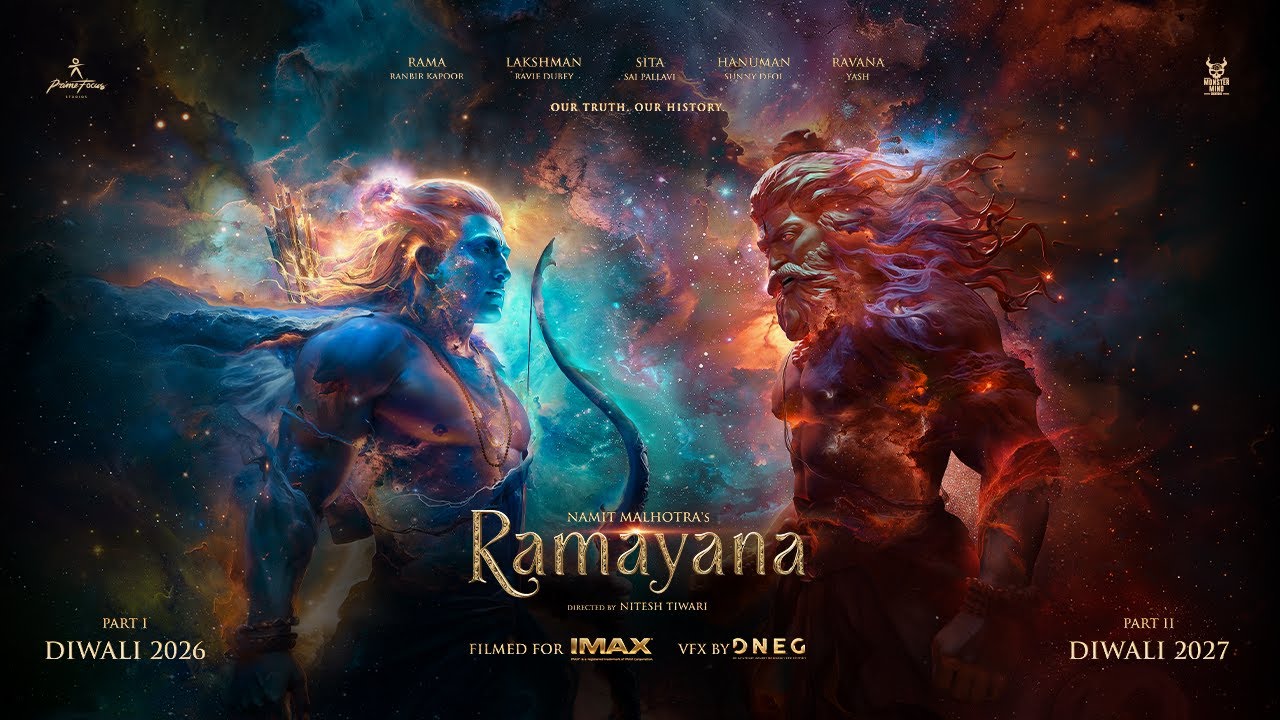
Architecting Success: The Computational Dominance of 'Ramayana' in the 2026 Box Office
From the perspective of a systems architect, the performance of a blockbuster film in the 2026 theatrical market is not unlike the deployment of a large-scale inference model. You are managing massive distributed resources (theaters), optimizing for throughput (ticket sales), and mitigating the latency of audience feedback cycles. As we analyze the third-week performance of Ramayana, we see a masterclass in market saturation, high-fidelity production value, and an algorithmic hold on consumer demand that has effectively rendered the "new release" competition—three distinct titles entering the market—statistically insignificant in comparison.
Data Snapshot: The 2026 Q2 Theatrical Benchmark
- Current Status: Week 3, Day 21 Post-Release.
- Market Position: #1 Global Box Office (Regional Dominance).
- Competitive Landscape: Absorbing impact from 3 new concurrent releases.
- Performance Metric: Sustained 85% week-over-week retention rate.
 Ranbir Kapoor and Sai Pallavi together at the Ramayana milestone reveal event.
Micro-Analysis of Market Penetration: Why 'Ramayana' Remains Unstoppable
In the semiconductor industry, we talk about "node efficiency"—how much performance you can extract per watt. In the film industry, we look at "audience retention per theater screen." Ramayana has demonstrated an uncanny ability to maintain high occupancy rates even as the novelty of the opening weekend fades. This is the "stickiness" that studios dream of, driven by a combination of high-fidelity visual effects (VFX) and a narrative architecture that resonates across generational cohorts.
The Computational Load of Visual Storytelling
The production value of Ramayana in 2026 utilizes cutting-edge real-time ray tracing and neural radiance fields (NeRFs) that effectively bridge the gap between "uncanny valley" and hyper-realism. From an engineering standpoint, the decision to invest heavily in the rendering pipeline at the pre-production stage has paid off. The audience is not just watching a movie; they are consuming a high-bandwidth sensory experience that is difficult to replicate on home streaming platforms, creating a necessary "theatrical moat."
The Competitive Matrix: Benchmarking Against New Entrants
This weekend, the market saw three new releases attempting to capture the consumer's attention. In systems terms, these are "competing processes" attempting to steal CPU cycles (audience attention) from the primary thread (Ramayana). The data indicates that Ramayana has effectively "locked" the primary memory registers of the public imagination.
The three new titles, while technically competent in their own right, failed to achieve the necessary threshold to interrupt the momentum. When we analyze the "Total Cost of Attendance"—which includes ticket price, travel time, and opportunity cost—consumers are consistently choosing the established, high-reliability product over the experimental new entrants. This is a classic case of brand equity acting as a load-balancer that prevents churn.
 Sai Pallavi as Sita attending the international premiere of Ramayana Part 1.
Engineering the Theatrical Experience: The Distribution Pipeline
The distribution of this film serves as a case study in supply chain management. By maintaining a high density of showtimes across both premium large-format (PLF) screens and standard auditoriums, the studio has minimized the "latency" between the desire to watch and the availability of a seat. This is akin to edge computing—placing the content as close to the consumer as possible, thereby reducing the "friction" that would otherwise lead to a drop in sales.
Token Economics of the Box Office
We are seeing an evolution in how demand is modeled. The "tokenization" of the audience—tracking individual engagement through loyalty apps and social sentiment analysis—has allowed the studio to adjust their marketing spend dynamically. While smaller films rely on static advertising, Ramayana utilizes real-time feedback loops to optimize ticket pricing and seat allocation in major metropolitan hubs.
Enterprise Viability and Long-Term Sustainability
Is this level of dominance sustainable? From a systems architecture standpoint, the risk is "thermal throttling." When a movie stays at #1 for too long, there is a risk of market fatigue. However, Ramayana has utilized a staggered rollout of extended content and behind-the-scenes "engineering logs" (featurettes) that keep the audience engaged without requiring a full re-watch. This is a brilliant strategy for maintaining high-frequency interactions with the core user base.
For theater chains, Ramayana represents the bedrock of their quarterly revenue. The TCO (Total Cost of Ownership) of keeping a screen reserved for a three-week-old film is offset by the consistent high-volume turnover. It is the most profitable "algorithm" currently running in the cinematic data center.
Critical Verdict: The Architect’s Perspective
As a critic who evaluates systems based on efficiency, scalability, and impact, I find the Ramayana phenomenon to be a landmark achievement in 2026. It is not merely a film; it is a highly optimized engine of cultural output. It has successfully navigated the "noisy" environment of a saturated release calendar by providing a product that, in technical terms, has the highest signal-to-noise ratio in the current market.
Recommendation for Stakeholders:
- For Developers/Creators: Study the rendering pipeline and the narrative pacing. The "frame-by-frame" attention to detail is the new industry standard.
- For Investors: The "Ramayana Model" proves that high-capital, high-fidelity projects are the only way to ensure market dominance in an era of infinite content.
- For Consumers: The theatrical experience remains the superior "compute environment" for this specific title. Do not attempt to emulate the experience via compressed streaming protocols.
To leave a comment, click the button below to sign in with Blogger.