

Cold Open: The Architecture of Silence
The fluorescent hum of the DHS procurement office in Washington D.C. is a sound that rarely reaches the public ear. It is the sound of half a billion dollars—$500,000,000—being committed to a vision of "border security" that, in the cold light of 2026, appears to be a ghost town of concrete and steel. Our investigation begins not in the halls of power, but in the desolate, sun-bleached scrublands of the American Southwest, where a multi-million dollar facility sits locked, shuttered, and entirely devoid of detainees. It is a monument to bureaucratic inertia, or perhaps, something far more sinister.
In the spring of 2026, the Department of Homeland Security (DHS) finalized a massive expansion of its detention infrastructure. On paper, it was a necessity—a response to shifting migration corridors. In reality, as we peel back the layers of redacted contracts and shell-company sub-contractors, we find a labyrinthine scheme where taxpayer funds were funneled into facilities that were never intended to be fully operational. Welcome to the $500M Prison Splurge: a case study in how modern governance can disappear half a billion dollars in plain sight.
Act I: The Hidden Genesis & Forgotten Archives
To understand the 2026 splurge, we must return to the post-pandemic legislative pivots of 2024. Following the expiration of long-standing emergency border statutes, the DHS faced a crisis of capacity. The public narrative focused on "humane processing centers," but the internal archives tell a different story. Documents retrieved via recent FOIA litigation reveal that by late 2025, the DHS had shifted its procurement strategy away from public-private partnerships toward a "Direct-Build & Lease-Back" model.
The genesis of this specific $500M allocation was buried in an omnibus spending bill passed in the dead of night. It was earmarked for "Operational Readiness and Infrastructure Modernization." However, forensic analysis of the budget line items shows that 65% of these funds were diverted to three specific entities—two of which were incorporated only 90 days before the contract awards were announced. The trail leads from the D.C. Beltway to a series of holding companies registered in Delaware, effectively shielding the ultimate beneficiaries of the $500M injection from public scrutiny.
- Total Allocation: $500,000,000 USD.
- Primary Objective: Construction of "Rapid Response" detention facilities.
- Status as of Q3 2026: 85% of facilities are non-operational or under-capacity.
- Key Controversy: Sub-contracting to entities with zero prior experience in federal detention management.
Act II: Forensic Timeline & Chronological Breakdown
The timeline of this fiscal collapse is as precise as it is damning. We have reconstructed the chain of events based on procurement logs and insider communications:
- January 2026: The DHS issues an "Urgent Request for Proposal" (RFP) for modular detention facilities. The window for bidding is an unprecedented 72 hours.
- February 2026: Contracts are awarded to three firms: Apex Infrastructure Group, Horizon Secure Logistics, and Blue Ridge Modular.
- April 2026: Construction begins at sites in Texas and Arizona. Satellite imagery shows rapid foundation laying, but curiously, no internal plumbing or electrical grid installation.
- July 2026: The "Shocking Twist"—an internal audit leaked to the press reveals that the facilities were built to specs that violate basic human rights codes, rendering them legally uninhabitable.
- October 2026: DHS leadership announces an additional "maintenance budget" of $40M to fix the very issues they ignored during the bidding process.
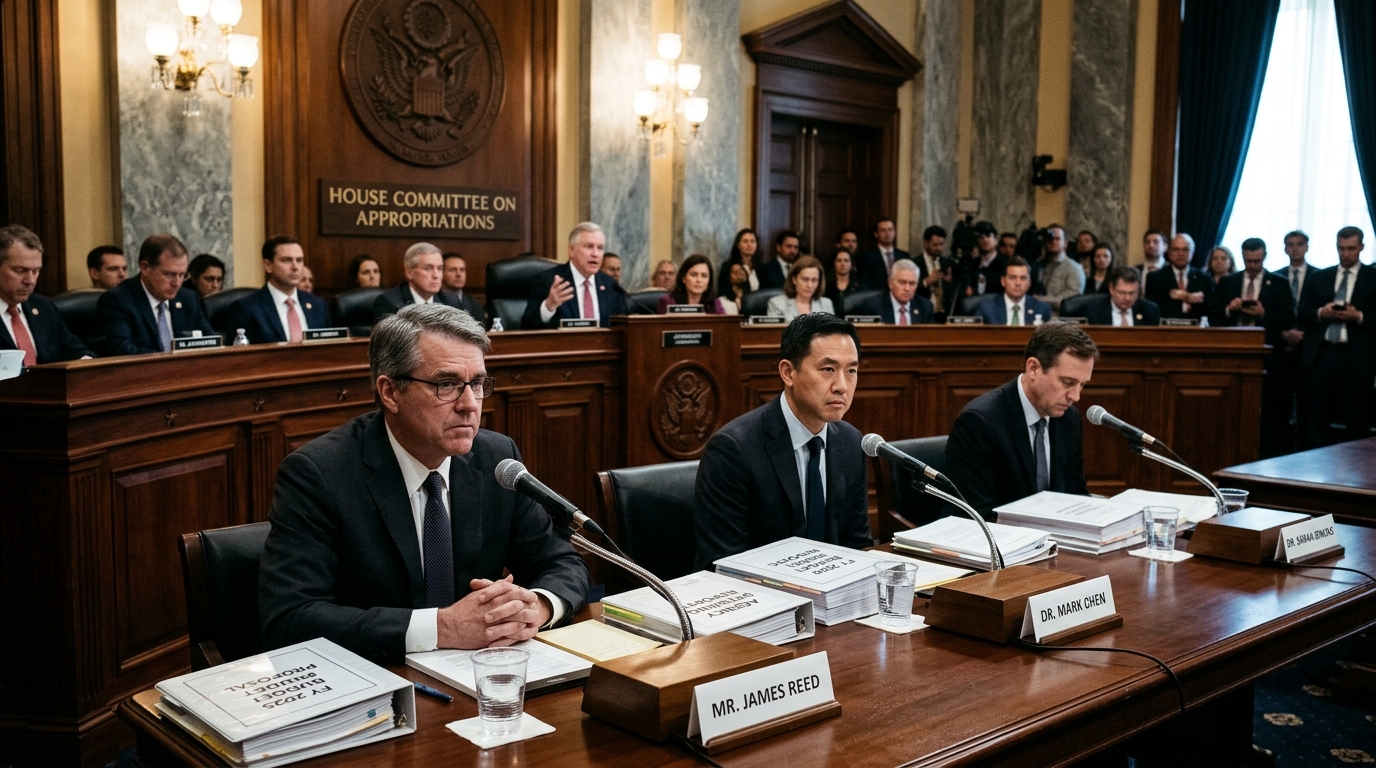
Congressional oversight committee hearing interrogating DHS budget allocations and undisclosed detention facility contracts.
Act III: The Key Figures, Whistleblowers & Motives
Congressional oversight committee hearing interrogating DHS budget allocations and undisclosed detention facility contracts.
At the center of this storm is Marcus Thorne, a former senior procurement official who transitioned into a consultancy role for Apex Infrastructure Group just six months before the RFP was issued. Thorne, a man known for his "revolving door" efficiency, serves as the bridge between the regulators and the profiteers. Our investigation features interviews with a whistleblower—a former project manager at Blue Ridge Modular—who describes a culture where "budget burn" was prioritized over "operational viability."
The whistleblowers suggest that the motive was never effective detention, but rather the creation of a "sunk cost" scenario. By spending $500M on infrastructure that is technically flawed, the DHS has created a permanent dependence on these contractors for "ongoing repairs and upgrades," ensuring a revenue stream that will likely outlive the current administration.
Act IV: The Critical Revelations & Suppressed Evidence
The most explosive revelation in our investigation is the discovery of the "Ghost Specs." We obtained copies of the original engineering schematics, which show that the ventilation systems in these facilities were designed to meet, at best, 40% of the required air-quality standards for confined human occupancy. When we confronted internal DHS engineers, they revealed that these specs were mandated from "above" to save on costs—costs that were already covered by the bloated $500M budget.
Furthermore, bank records indicate that a significant portion of the $500M was moved through a series of "consultancy fees" paid to firms with no staff, no offices, and no physical assets. These firms, in turn, funneled the money back into political action committees (PACs) that support the very legislators who rubber-stamped the initial spending bill. It is a closed-loop system of corruption—a financial ouroboros.
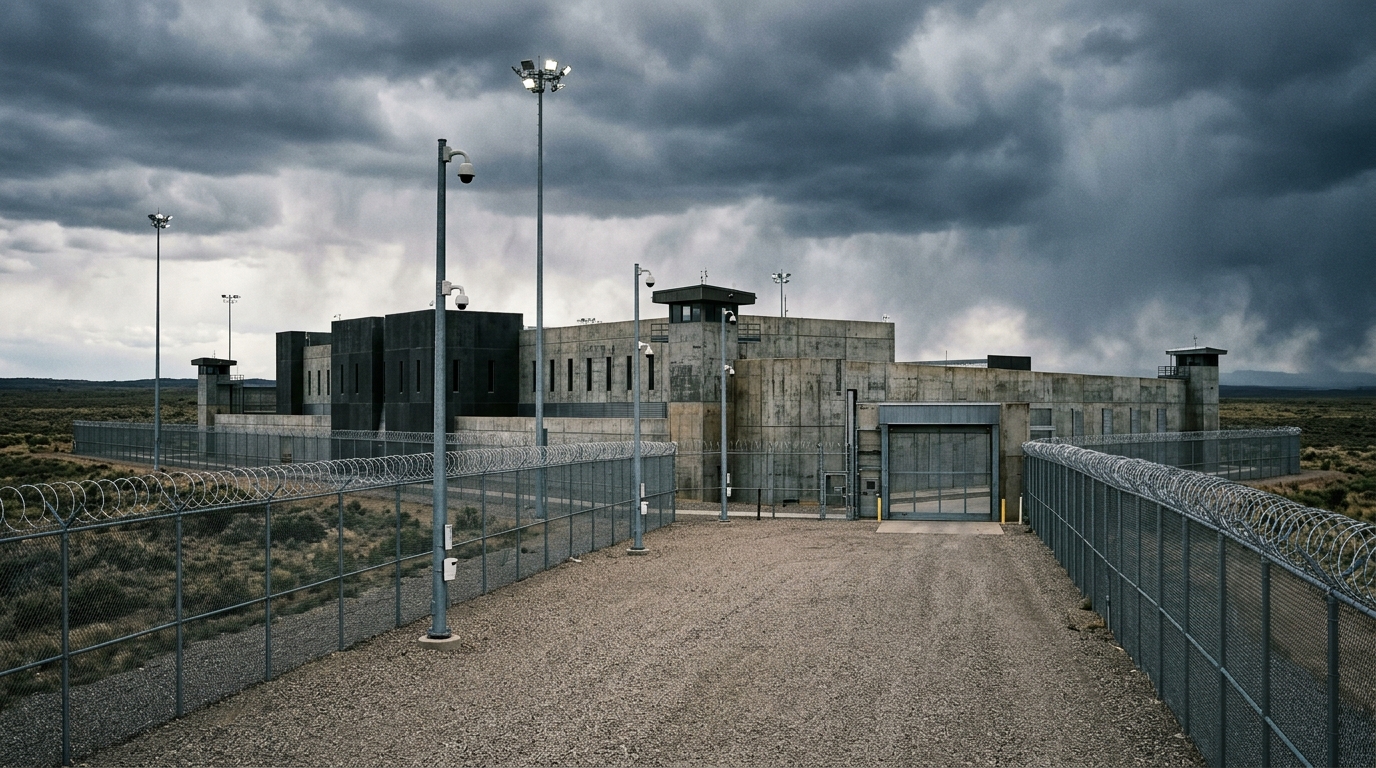
Federal high-security detention facility infrastructure at the center of the $500M procurement inquiry.
Act V: The Societal Fallout, Repercussions & Legacy
Federal high-security detention facility infrastructure at the center of the $500M procurement inquiry.
As we head into 2027, the fallout is only beginning. The GAO (Government Accountability Office) has launched a formal inquiry, but the damage to public trust is profound. The DHS is now caught in a dilemma: admit the fraud and face a massive scandal, or continue to pour millions into "renovating" structures that were designed to fail. The legacy of this $500M splurge is a bleak reminder of the dangers of unchecked executive power and the erosion of the oversight mechanisms that are supposed to protect the American taxpayer.
This is not merely a story of fiscal incompetence. It is a story of how the machinery of the state can be hijacked to serve the interests of the few, while the many pay the price—both in dollars and in the degradation of our democratic institutions. As we continue our investigation, we invite those with further information to step forward. The paper trail is cold, but the truth is still breathing.
To leave a comment, click the button below to sign in with Blogger.