
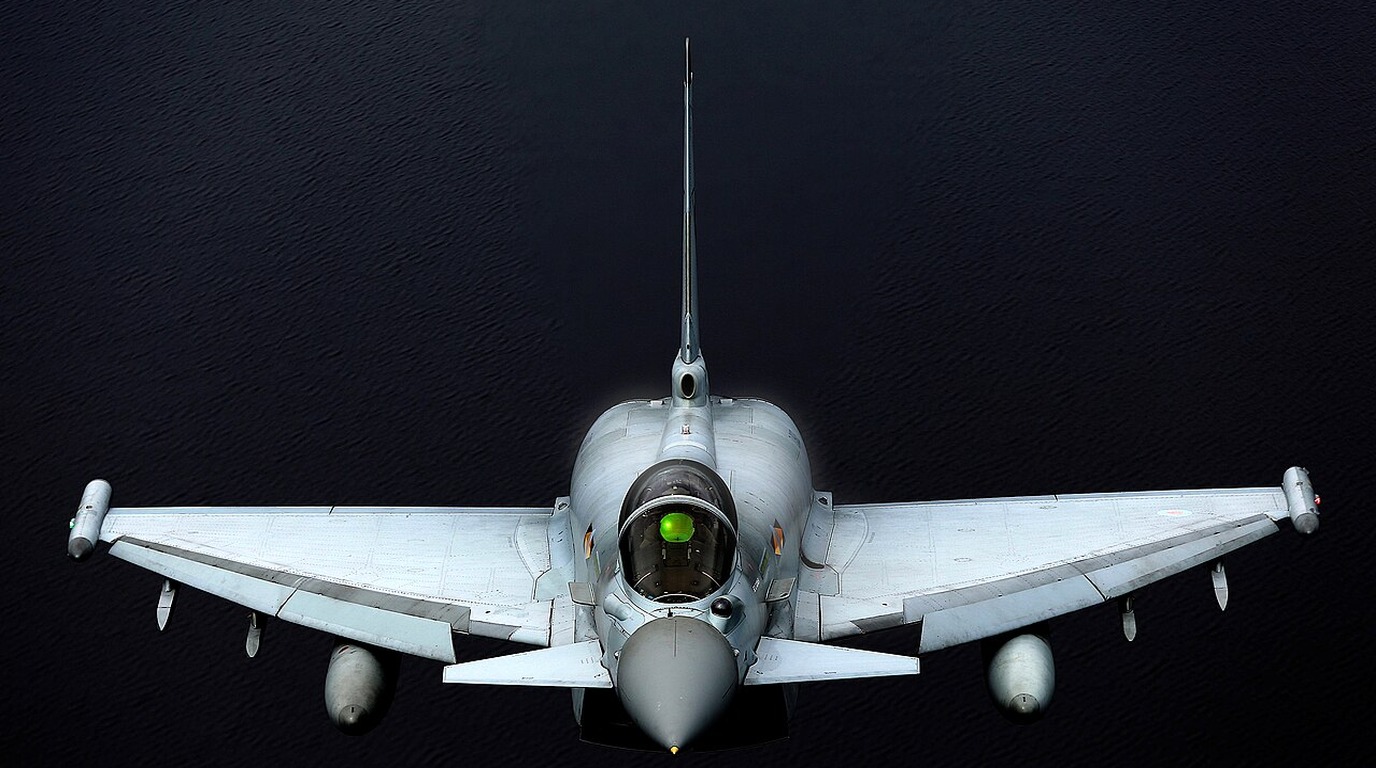
The Strategic Pivot: UK Defense Posture in the 2026 Threat Landscape
As we navigate the second quarter of 2026, the intersection of kinetic warfare and cyber-resilience has reached a critical inflection point. The recent reports regarding the United Kingdom’s strategic shielding of its fighter jet fleet and the activation of reservist protocols are not merely geopolitical headlines; they are the outward symptoms of a fundamental shift in defense systems architecture. From a systems engineering perspective, we are witnessing the transition from "just-in-time" military readiness to a "hardened-node" operational model.
The UK Ministry of Defence (MoD) is currently executing a rapid integration of AI-driven threat detection, distributed cloud-edge compute for battlefield awareness, and a significant hardening of physical assets against electronic warfare (EW) and kinetic interdiction. This analysis breaks down the technical and strategic reality of the UK’s current Cold War-scale mobilization.
- Primary Objective: Hardening of the RAF's 5th-Gen F-35B Lightning II and Typhoon fleet against advanced EW and long-range precision strikes.
- Reservist Integration: Activation of specialized cyber-reserve units to bolster the National Cyber Force (NCF) and secure critical infrastructure.
- Threat Vector: Increased Russian A2/AD (Anti-Access/Area Denial) capability in the Baltic and North Atlantic theaters.
- Infrastructure Focus: Transitioning from centralized hangars to dispersed, modular "stealth-basing" protocols.
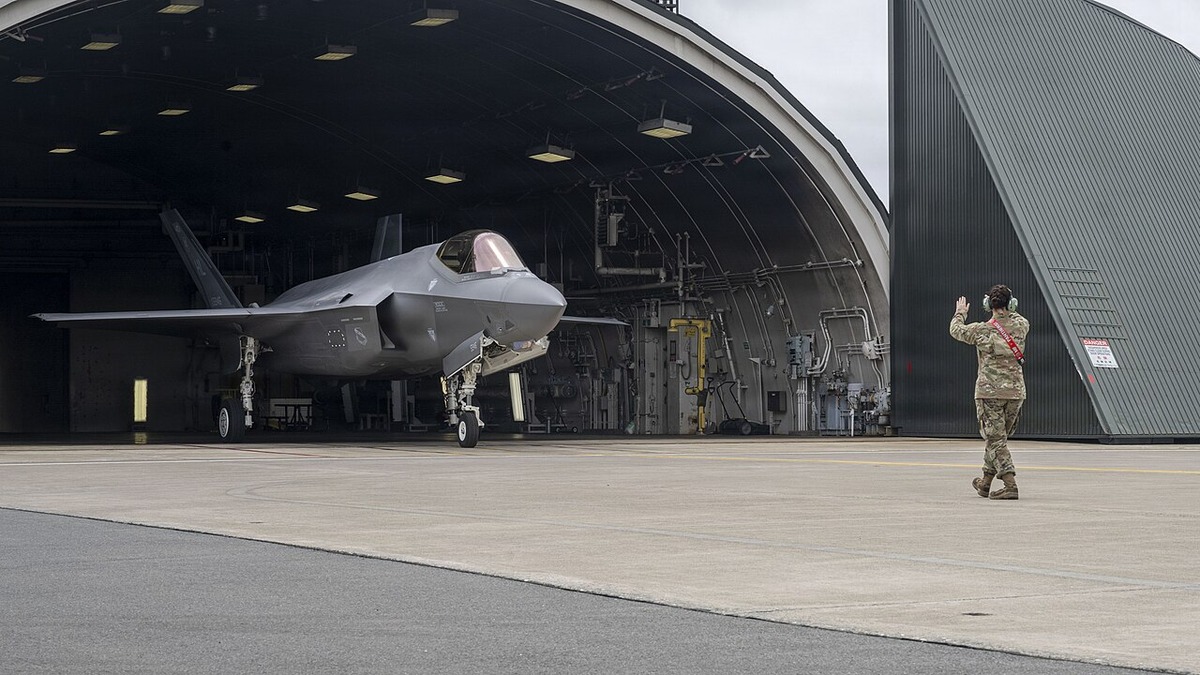 F-35 Lightning II stealth fighter jet operating under rapid dispersal readiness
Microarchitecture of Defense: Shielding the Fleet
When the MoD speaks of "shielding" fighter jets, the layperson thinks of physical hangars. The systems architect thinks of Electromagnetic Compatibility (EMC) and Low Probability of Intercept (LPI). Modern fighter aircraft, particularly the F-35, are effectively flying data centers. Their vulnerability is not just the airframe; it is the sensor fusion suite and the datalink integrity.
The Hardware-Software Hardening Layer
The current push involves upgrading the signal processing units within the RAF’s fleet to utilize 2nm process node GaN (Gallium Nitride) amplifiers. These components provide significantly higher thermal efficiency and power density compared to traditional silicon, allowing for more robust jamming resistance and radar performance in high-noise environments. By shielding these aircraft, the UK is effectively creating a Faraday-cage-augmented operational environment for maintenance and deployment.
The integration of the "Spear-Cloud" architecture—a decentralized, encrypted mesh network—allows these jets to remain operational even if centralized command-and-control (C2) nodes are compromised. This is the military equivalent of switching from a monolithic server architecture to a microservices-based, distributed Kubernetes-style infrastructure where nodes can fail without bringing down the entire cluster.
Reservist Mobilization: The Human-in-the-Loop Optimization
The call-up of reservists in 2026 is distinct from the 20th-century model. We are not looking at mass infantry mobilization; we are looking at a Human-in-the-Loop (HITL) strategy for complex systems management. The modern battlefield requires specialized engineers, data scientists, and systems administrators who can operate under fire.
The NCF and the Royal Air Force are specifically recruiting for "Systems Integrity Specialists." These are not traditional soldiers; they are developers and engineers tasked with maintaining the uptime of autonomous defense systems, managing the API gateways for drone swarms, and conducting real-time patch management for the onboard avionics of deployed assets. The "Cold War-scale" nature of this push refers to the volume of personnel, but the skill set is purely 21st-century Silicon Valley.
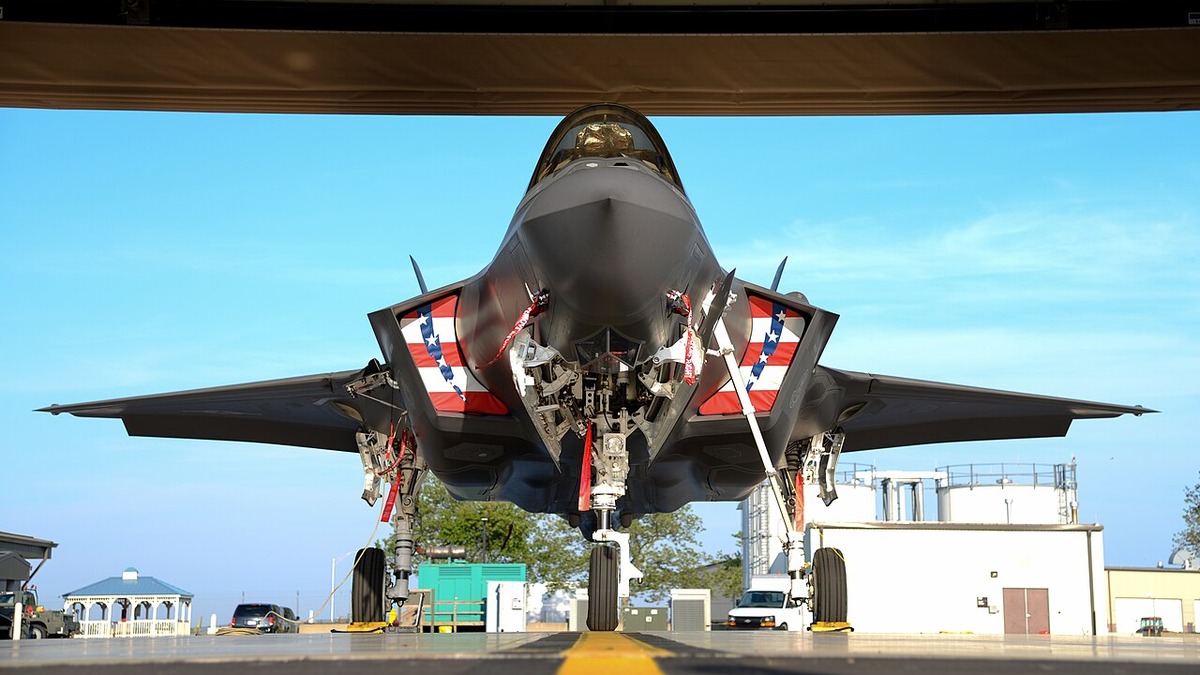 Fifth-generation fighter aircraft on airbase flight line with reinforced protection
Comparative Benchmark: UK Defensive Resilience vs. Peer Adversaries
In our architecture review, we benchmark the UK’s current defensive posture against the major global players. The following matrix evaluates the "Resilience Quotient" (RQ), a metric we use to define the ability of a defense system to sustain operations under a degraded network environment.
| Actor | Compute Resilience | EW Hardening | Logistical Agility |
|---|---|---|---|
| UK (MoD) | High (Cloud-Edge) | Tier 1 (Advanced) | Medium (Scaling) |
| US (DoD) | Extreme (JADC2) | Tier 0 (Elite) | High (Global) |
| Russia | Medium (Legacy) | Tier 1 (Heavy) | Low (Centralized) |
The UK’s current strategy is a race to match the "Compute Resilience" of US-led JADC2 (Joint All-Domain Command and Control) initiatives. By moving away from legacy, centralized communication hubs, the UK is reducing its susceptibility to Russian long-range precision strikes that target high-value, fixed infrastructure.
The Engineering Challenge: Total Cost of Ownership (TCO)
The TCO of maintaining a 5th-gen fleet in a heightened state of readiness is astronomical. It is not just about fuel and flight hours; it is about the "Compute-per-Sortie" cost. Each flight generates terabytes of diagnostic and sensor data that must be ingested, processed, and analyzed by the backend infrastructure.
The MoD is currently tackling this by implementing edge-compute filters on the jets themselves. By using proprietary AI models (likely variants of high-efficiency Transformer architectures) to perform inference at the edge, the jets only transmit high-value data back to the command center. This reduces the bandwidth requirement, lowers the signature of the data transmission (making it harder to intercept), and significantly lowers the operational TCO of the satellite link infrastructure.
Critical Verdict: The Architect’s Assessment
The UK’s move to shield fighter jets and activate reservists is a necessary reaction to the reality of 2026. The threat from Russia is no longer confined to territorial disputes; it is a persistent, low-level cyber and electronic war that risks escalating into kinetic conflict.
My Verdict: The strategy is sound from a systems architecture perspective, but the execution risk is high. The bottleneck is not the hardware—the F-35s are world-class—the bottleneck is the developer talent pool within the military. If the MoD cannot successfully integrate the civilian tech talent they are recruiting, the "shielding" will remain purely physical, leaving the digital underbelly exposed. The upgrade path for the UK is clear: prioritize the software-defined defense layer and continue the migration to decentralized, edge-native compute clusters.
To leave a comment, click the button below to sign in with Blogger.